
The Reading Cabinet
A space dedicated to the theoretical and visual exploration of specific series.
(Click to view any of the 4 catalogs)

EVANESCENCIA
30 YEARS OF ARTISTIC CAREER
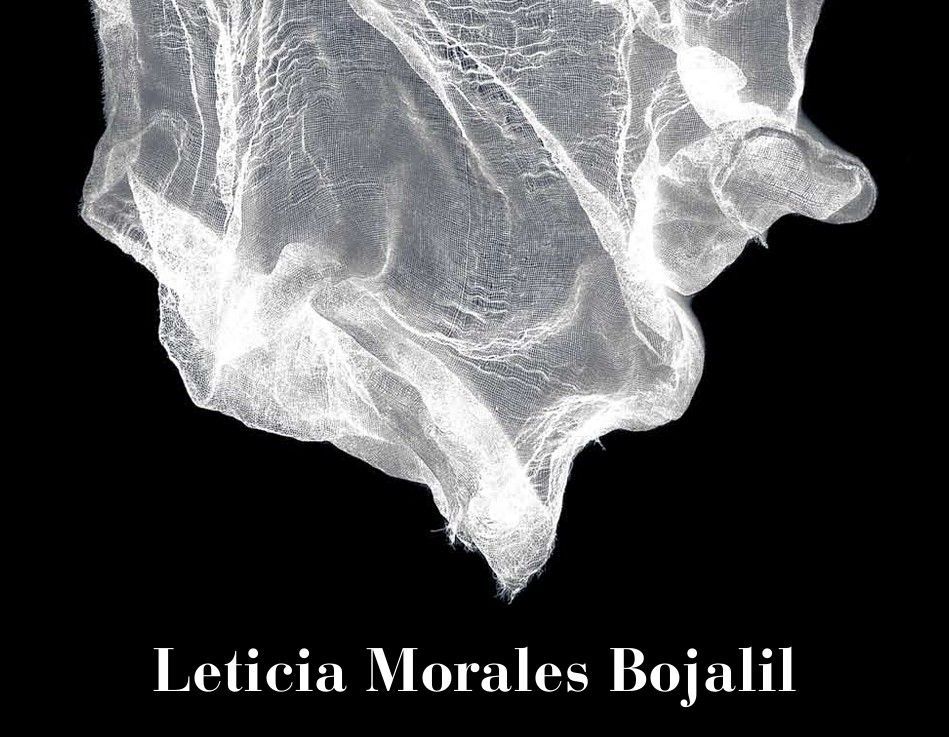
Art as a legacy...
New paragraph
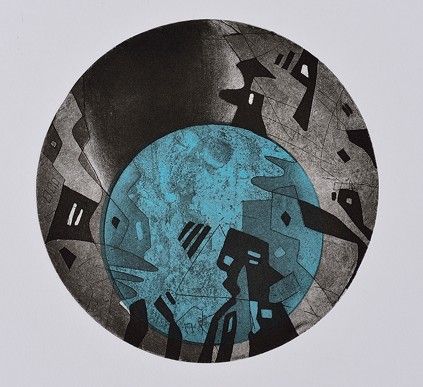
ON THE OTHER SIDE OF THE MOON
New paragraph
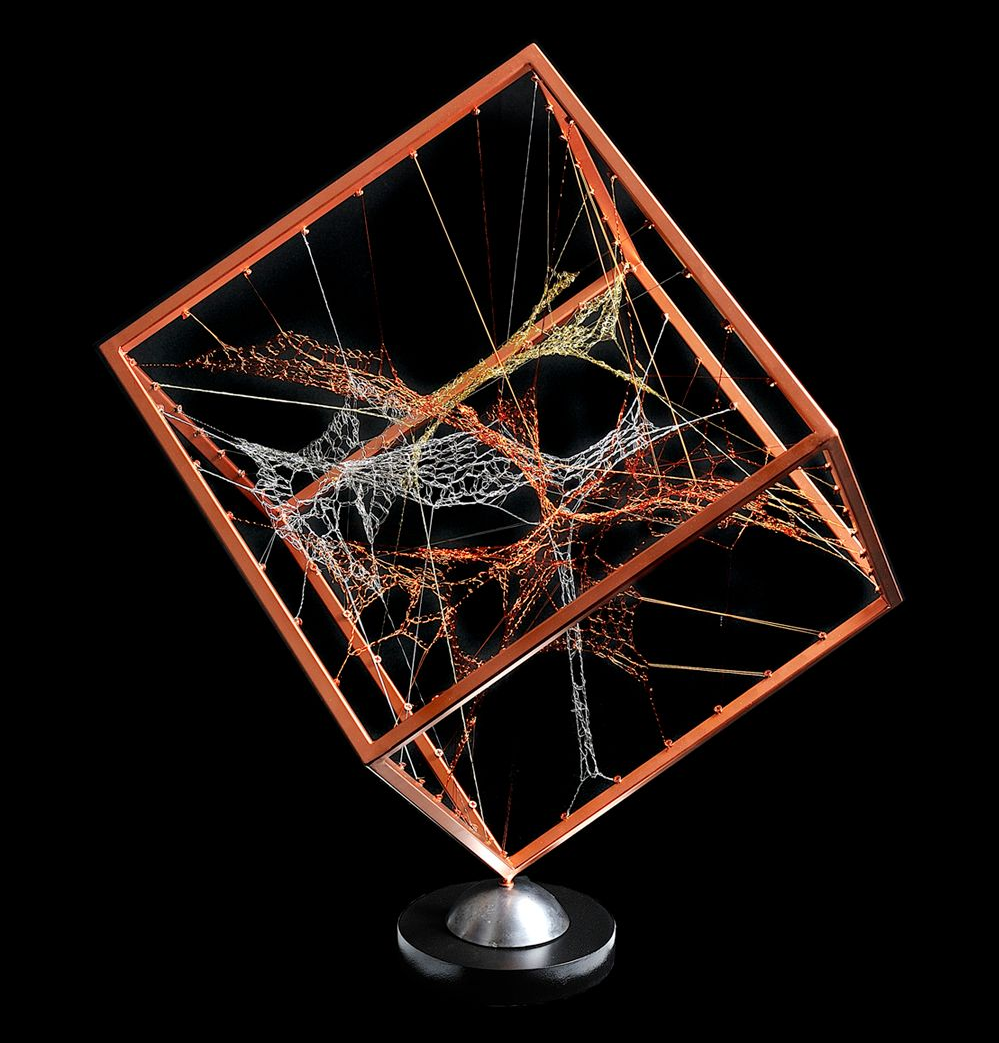
BERESHIT CATALOGUE
LETICIA MORALES BOJALIL
Leticia Morales's recent work is the result of many years of exploration. Her contributions to three-dimensionality result in pieces crafted from materials that, under her direction, acquire new meaning. Rolls of plastic covering walls, creating a virtual/visual barrier; springs obstructing the path to the word "Humility" written in reverse; copper wire inhabiting the interior of a cube as if it were its intimate, contained universe—these are just some of the ways in which Morales begins a rich new chapter in her career.
His tireless research directs his recent works toward spaces that promise new and diverse strategies, as well as contemporary languages. The abandonment of conventional narratives contributes to the refinement of works that, although they may seem cryptic at first glance, are consistent with more concise ways of addressing the themes that have always inhabited his art.
Santiago Espinoza de los Monteros
SYNTHESIS AND DEVELOPMENT IN THE WORK OF: Leticia Morales Bojalil
To meet Leticia Morales and see her work, I had to travel from my home in Mexico City to the Southern Bus Terminal in Taxqueña. Two hours later, I arrived in Puebla as night was beginning to fall.
It was Saturday. Less than an hour later, we were in the dining room of the magnificent hotel Leticia had reserved for me, with two cups of the best coffee Mexico produces, slices of toast, and an unbeatable fig jam. I needed two full days to get to know and work, to-
I am sending a large number of notes, the enormous production of this accomplished artist whose text is coming to an end.
I don't know if Leticia is fully aware of the vigor, the diversity, the unity, the infinite capacity to touch every note, every chord of her symphonic work. What is certain is that, to my delight, as I viewed one painting after another, one object after another, one sculpture after another, one print after another, the whole grew in my vision and in my conviction that I was witnessing a truly remarkable body of work. Later, back in my studio, while writing this text, the work acquired even more dimension in my memory and as I typed on the computer. In short: Leticia Morales is an artist of incalculable value, with an unwavering ethical approach to her work.
Lelia Driben
THE GRAPHIC ART OF LETICIA MORALES BOJALIL
ALEJANDRO ALVARADO CARREÑO
In this century, technology offers us many possibilities in printing systems, as well as the manipulation of digital images. Leticia Morales uses traditional techniques that remain relevant, such as engraving, which provide a quality of originality impossible to replace with photographic or digital reproductions, since they do not produce qualities such as textures and reliefs (embossing). Thus, Leticia's work shows us a boldness in her abstract conceptual proposals that evoke many traces of nature.
In Leticia Morales's graphic work, we can observe the contrasts of black and white and the range of grays, achieved through her knowledge of the craft of drawing and her mastery of engraving techniques. For this reason, one of her prints was selected for the first Biennial of Contemporary Mexican Printmaking at the National Print Museum.
Master Alejandro Alvarado Carreño
Head of Printmaking, Postgraduate Program in Visual Arts, National School of Visual Arts, UNAM
BERESHIT, LETICIA MORALES BOJALIL
CESAR GORDILLO AGUILAR / MARO 2012
It took art three centuries to understand that the theme of space involved a relationship between a moving subject, a place, and an environment that transforms its conditions. Dominated by the norms of linear perspective, art's interest in the concept of space was radically transformed by the early experiments of pioneering artists in the field of Installation Art, such as El Lissitzky and Robert Morris, at the beginning of the 20th century.
Today, practically anyone talks, writes and claims to do installation art; however, few are those who fully comply with the basic principles of what we could call the quintessential artistic in-discipline.
In her artistic practice, Leticia Morales, through multidisciplinarity, has managed to displace the rigid boundaries of painting, engraving or sculpture, driven by an almost obsessive search for new techniques and materials that has allowed her to dilute, or frankly annihilate, the traditional concepts that defined, in her artistic work, rigid fields of knowledge and ways of doing things.
Leticia Morales, in this work of exploration and experimentation, has understood that an “installation of art objects” is not Installation Art, and that doing Installation implies a totalizing practice of transforming the place where the conception and integral production of movement, space, time and sensations that modify the experience of it are involved, and above all, the creation of what Derrida calls an event, that is, a production of meaning that does not allow us to continue being as we were.
Building a place in these terms is, in essence, a foundational act that the artist rarely achieves in the development of their work; in BERESHIT (Genesis), Leticia Morales understands this foundational act from the narrative of the world's memory and the great myths of creation, producing an integral spatial environment, where the guiding thread, creation, serves as a motive to build a space of diversity, dissolving the limits and mixing in a heterogeneous way the diverse artistic expressions, thus transforming the place of art into an event where different forms of expression, knowledge and language converge, capable of transforming ways of seeing, feeling and thinking.
…there is space when the place, stable by nature, is affected by vectors of direction, time and movement exerted by the intervention of the walkers,……. space only exists as a practiced place.
Michel de Certeau